 EN
EN
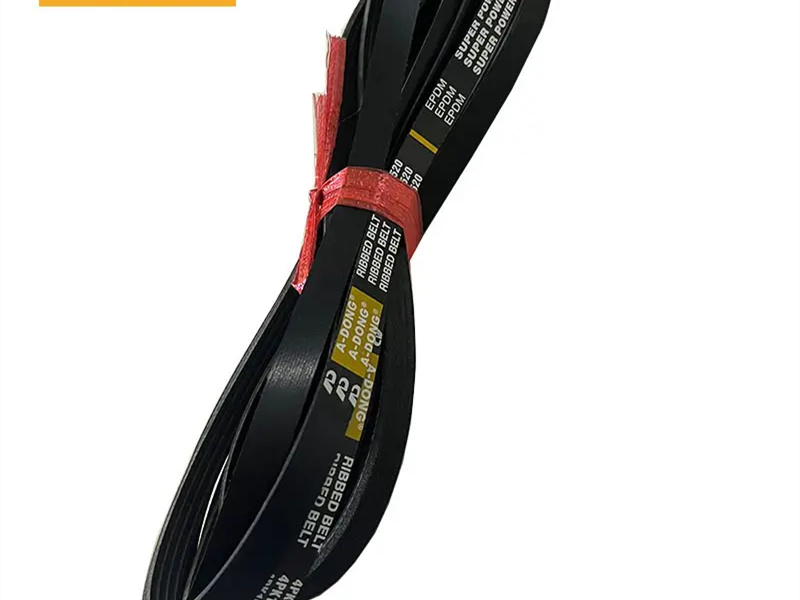
Ribbed belt: the driving element in car engines An important player in the background of today’s automotive engines is the so-called ribbed conveyor belt (PK belt, also: Poly-V Belt, Multi-V-Belt, Cogged Belt) which can be identified by its longitudinal ribs. There are no fixed regulations for the lifespan of a ribbed conveyor belt, however early detection of wear is becoming more and more crucial for technicians and fleet managers in order to prevent breakdowns on the side of the road and additional repair costs. Guanpin is a specialist for the development and production of V-belts, timing belts and PK belts, and offers comprehensive diagnostic guides supported by failure data.
Visual Inspection – Cracking, Glazing, and Fraying Edges
When checking for a worn belt shut down the engine and observe the belt in its location. Inspect the top surface of the belt and the underside with good illumination. You will want to look for cracked bottoms to the ribs that are usually caused by rubber compounds losing plasticity from thermal ageing or heat damage from friction caused by belt slip under load which reduces its capacity to generate torque.
When more than 3 cracks in 1cm of rib are observed the belt has been damaged in time for replacement and if you see areas where there has been glazing- the surface appears highly polished or shiny this is from belt slip that results in material loss due to reduced coefficient of friction.
There should be no visible frays or frayed cord structure that comes from excess belt movement due to belt misalignment or faulty tensor. As strong as the quality checks are on the Guanpin product, it's not unlike even our own stringent controls - heat stabilized EPDM compounds that will continuously endure temperatures up to 120°C – some belts simply don't do well in the engine compartment environment.
Tension and Deflection Testing – The 10 kg Push Rule
Another dead give away that your serpentine belt needs to be replaced, is if the tension on your serpentine is over or under tight. In other words if the pressure when you press on the serpentine belt at its longest stretch (between the alternator and the crankshaft pulley) is not around 10kg/22lbs the belt has seen it’s time and must be changed. For most passenger cars, the serpentine belt’s properly working state of tension is between 6-10 mm (or 0.25-0.40 in) of Deflection. 12mm of deflection, means that your belt is probably over stretched, it’s about after 40000 - 60000 miles that the aramid or polyester tensile cords will stretch by means of micro Elongation and once we see a smaller measurement of 4mm than we already know your belt has been over-tensioned, and has most likely put too much stress on the water pump bearings. Fleet owners will have a life time of a belt calculated considering The amount of working time the vehicle works with, as for engineering characterstics of a belt based on Elongation curves, delivered by Guanpin's Engineering team, instead of just measurement, that means your serpentine is going to outlive the conventional calculation of life-time for this component, and not mileage-based calculation.
Auditory Diagnosis – Squeal, Chirp, and Screech Patterns
Your ears are good instruments when it comes to diagnosis. Rev up engine to 2000 RPMs, listen at idle and hold at idle. High-pitched chirps usually indicate that the belt ribs are worn and no longer seat properly in the pulley grooves, causing the belt to skip over each V-rib repeatedly. Screeching when accelerating and under A/C is usually caused by oil contamination or hardness of the rubber. A low-frequency rumble (belt can be seen vibrating) is an indication that the belt's tensile modulus degrade abnormally, causing harmonic vibrations. Guanpin's production process makes a complete use of dynamic balancing of each PK belt, however after the product is used in the field, it may be attacked by field contaminants such as leakage of power-steering fluid and coolant. Clean the belt with a dry rag, and listen for any unusual noises. If present, replace the belt immediately.
Mileage-Based Replacement and Service Intervals
For most passenger vehicles, the OEM belt replacement intervals are between 60,000-100,000 km. For heavy-duty (severe) services (e.g., heavy-duty trailer hauling, hot environment, etc), interval should be shorter from 40,000-70,000 km or calendar age. Replace the belt at 50,000 km always check the alignment marker of automatic belt tensioner - a specific kit is provided by Guanpin with which the torque information will be present to properly install the belt). Whenever the belt is replaced, the surface of the corresponding pulley must be inspected for any roughness or pitting.
All Guanpin PK belts available on the market are manufactured in bulk, which offers customers the flexibility to utilise existing stock of “older” inventory first, which we see as a contribution to reducing total cost of ownership for them. There exist generally four indications when the belt should be replaced – visual indication, belt tension indication, audibility check, and mileage. Xingtai Guanpin Rubber Products Co., Ltd is a supplier for belts (such as V belt, timing belt, PK belts, etc.), manufactured under stringent OEM requirements and according to international ISO standards and deliver high level quality. Available inspection support tools, wallcharts and a technical team can assist workshop owner and distributor to choose the most optimal timing for replacement.
Please contact Guanpin’s technical team to find the best replacement strategy for your entire fleet, even per individual rib for ribbed belt replacement.