
 EN
EN
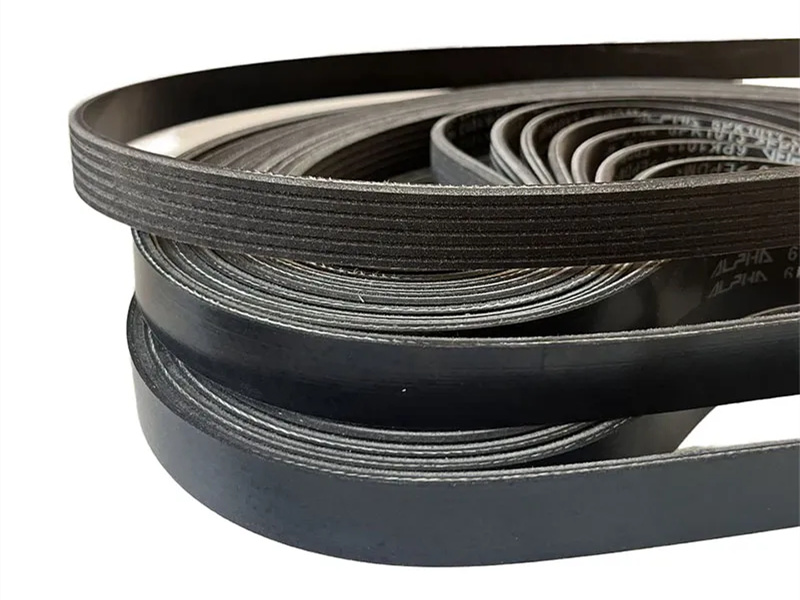
A successfully completed third party audit is one of the most important steps in securing major export deals, OEM contracts, and long-term buyer trust. Whether you are being audited by a certification body or inspection by potential customers, you’ll be assessed on every aspect of your manufacturing: quality control processes, production traceability, employee working conditions, environmental performance, and more. Drawing on Guanpin’s 26-year of experience and our transformation from a regional rubber belt maker to a globally certified producer of timing belts, PK belts, and V-belts, we have identified several essential components that every belt manufacturer should address before the auditor arrives.
Documentation and Quality Management Systems – The Backbone of Compliance
First, the paper drill. Auditors want to see your quality manual, flow charts, control plans, inspection reports, calibration certificates and any non-conformance reports. Any omissions or inconsistencies are quick to get a thumbs down. At Guanpin, we utilize a completely paperless Quality Management System (QMS) in line with the requirements of ISO 9001 and IATF 16949. Certificates for raw materials, shop floor check sheets, and more, all bear a time and stamp linked back to a batch. For any impending audit, we stage a “document drill”, comparing physical shop floor records with the QMS, to attain an alignment of 100%. We will then also prepare a “traceability matrix” detailing one specific belt and following it from compounded mixture to sealed packed delivery. Our advice to fellow manufacturers: dedicate one full week pre-audit to reviewing all documents from the past 12 months.
Production Floor Organization and Process Control
Once paperwork is in order, the auditors follow a walking tour on the production line, taking note of mixing, calendering, extrusion, cord dipping, molding, vulcanizing, and finishing. Among the items on their auditor’s list are segregation of raw materials, equipment maintenance logs, training records for our operators, and ongoing performance metrics captured in real-time as production is in progress. We at Guanpin utilize a “5S + Safety” principle. The 5S consists of Sort, Set in order, Shine, Standardize, and Sustain, complemented with a plus Safety component that ensures our signage is clearly visible and understandable. Each workstation displays visual standard operating procedure (SOP) signage in both English and Chinese, and temperature/pressure/cycle-time data from the last 24 hours are displayed on digital screens for quick review. Additionally, our production manager serves as a “mock auditor”, conducting simulated walk-throughs to identify safety hazards such as loose wiring, improperly labeled chemicals, and poorly maintained tool stations. The “cord tension” or the “vulcanization curing time” steps each requires two operators to verify settings, then they sign to the changes.
Equipment Calibration, Maintenance, and Measurement Traceability
Auditors tend to focus most strongly on measurement tools: vernier calipers, micrometers, optical comparators, tensile testers, durometers and temperature chambers. They review the calibration certificate, traceability of the equipment to national or international standards and the recalibration frequency. Guanpin utilizes a specialized metrology lab and calibrates all of our shop-floor gages every quarter with certified NIST-traceable reference block material. Our "Calibration Master Log" documents the next due date for each instrument, color coded green (within date) and red (overdue). Our “run-off” or belt endurance testing rigs which mimic the application of belts under load and at speed are given a weekly internal “verification” (using our standard “control belts” for which performance is documented) and any drift exceeding 0.5% will prompt an immediate recalibration. Prior to any third party audit, we perform our own comprehensive “instrument audit” – insuring every instrument that is part of the final inspection process has a valid sticker; that the final inspector is competent with its use; and that spare calibrated equipment is readily available in the unlikely event an auditor wishes to compare our test readings to their own.
Environmental, Health, and Safety (EHS) Compliance
New audit demands will likely go way past how well your manufacturing facility manufactures items. Be prepared for discussions of your wastewater treatment processes, your fume extraction system and procedures for handling and storing your chemicals. You might also hear queries pertaining to the usage and storing of any Personal Protective Equipment (PPE) including emergency procedures and drill participation. For reference, we are frequently asked about water treatment and fume extraction from our vulcanization machines. Guanpin has installed a closed-loop cooling system and aftermarket activated carbon filters for vulcanization fumes. We maintain all appropriate documentation and conduct regular third-party emission testing of the factory environment. Our PPE procedures require that all personnel in a designated areas wear safety glasses, cut resistant gloves, and hearing protection. A safety briefing is conducted before every shift and recorded in our shift logs. There are regular fire drills (monthly) performed in the factory and the escape routes are clearly displayed. All chemical storage containers have Material Safety Data Sheets (MSDS) attached. Spill containment trays are used under all chemical storage areas. We suggest that manufacturers keep an EHS binder with all of their environmental test results, permits, and inspection reports on a separate table in the meeting room, making it easy for auditors to review.
At Guanpin, third-party audits don’t pose a difficulty, but instead, an opportunity for the team to identify strengths of our system, as well as a chance to earn customer’s deeper trust. It is our policy that we are ready to go for auditing any time of the day all year round, because for us, working on quality and conformance issues is just part of the daily operations of a company. For fellow belt manufacturers and potential collaborators, the team’s advice is: the earliest two months at least, before an audit, preparation activities should start. Involve every department and never try to conceal any problems or abnormalities – Auditors have to work their ways around the issues and will very much value your corrective action plans more. We welcome you to visit Guanpin's factory, review our audit dossier, and see firsthand how our timing belts, PK belts, and V-belts are manufactured to meet and exceed global standards for our valued customers. By choosing Guanpin, you have a partner who is always prepared.