 EN
EN
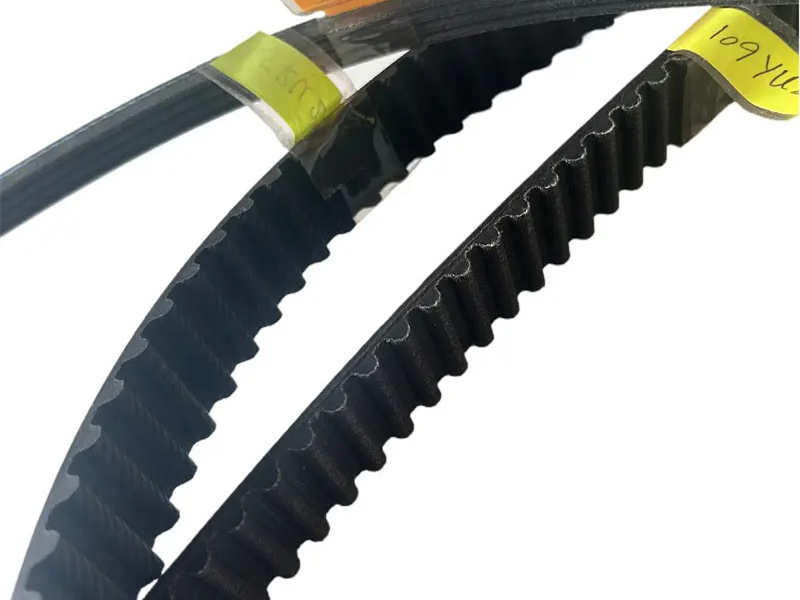
For auto professionals and fleet managers, it isn't just about the proper belt size, it's about how each belt works. As a rubber products manufacturer, we have manufactured both types for more than 26 years, and clearlywe see that the two rubber types have different roles in the operation of a vehicle. Whether it's the style or the cut, this guide outlines some of the main variations and provides some helpful matching tips in order to match it for each use.
Core Functional Differences
The easiest distinction between V-belt and timing belt is that they are used for different purposes in an engine's system. A V-belt is an accessory drive belt linking the rotation of the crankshaft in the engine to outside parts like the alternator, power steering pump, air conditioning compressor and water pump. It works on friction, and uses its trapezoidal cross section to provide a "friction fit" in its pulley grooves.
A timing belt, meanwhile, is a belt that is used only with the engine's timing mechanism. Its purpose is to ensure that the crankshaft and a camshaft move in the same direction while the engine is operating to open and close the engine's valves at a specific time in relation to the piston's motion in the cylinder. This is accomplished by positive engagement, the moulded belt teeth positive fitting into the sprockets, there can be no belt slippage. Because a timing belt that fails to operate could cause serious damage to the engine, and these belts are not made of the same material or subjected to as many specifications as a normal V-belt, they are a much stiffer product.
Structural and Material Distinctions
Both V and timing belts differ greatly in appearance and in construction. V-belt construction is very simple: A trapezoidal cross section fabric wrapped on the outside surface as the belt's friction surface and internal tension cords. The internal tension cords are (usually polyester or aramid) and are capable of withstanding moderate loads and providing some extensibility to absorb overloads. A timing belt has a flattened surface with a uniform row of accurately formed teeth on its inside surface. It is a more complicated structure with materials of high strength fibre glass or Kevlar tension cords, which have low extensibility at heavy load, and a specially formulated rubber compound which can maintain the property of tooth integrity at high temperature (sometimes EPDM). The most critical item is the tooth profile and even if the profile is slightly changed, it could cause timing issues. Guanpin can further modify the rubber compound and rope materials of belts according to their different types, as required for the different applications.
Matching Suggestions: When to Choose Each Type
It's the only timing mechanism that is allowed in all types of engines where the cam and crank need to be timed precisely to function properly. Most automobiles (gasoline and diesel) and many trucks, buses, etc. are equipped with this. The number of teeth, tooth pitch, belt width and belt length should all be checked when installing a timing belt. With timing belts there's no such thing as being out of sync; one belt tooth out, and the engine suffers! However, they require much less maintenance than V-belts. Guanpin manufactures timing belt strictly according to OEM specifications, fully meet the requirements of perfect fit and reliable use.
Customization and Sourcing Considerations
Even if it's not a technical consideration, sourcing strategy still plays a role. On markets with higher proportion of branding, Guanpin provides all-around customized solution for both V-belts and timing belts. They can be customised, Customer authorised logos can be used and they will only be printed if necessary, where brands are concerned. Furthermore, for a variety of specific demands in various regions, the appearance colour, rubber and rope materials are customized. Consider having two separate stock of V-belts and timing belts due to the difference in application, service life and cost. Precision engineered and necessary for safety, timing belts are more often higher priced. It all rings true to both lines of products, we have 26 years of production experience, advanced technology and consistent product quality. You will have a dependable and intelligent manufacturing partner that you can get useful, valuable and supported after-sales products from. Co-operative agreements for longer term users are encouraged and we are confident that we will be able to help you to supply the best belt products for all your market uses.