 EN
EN
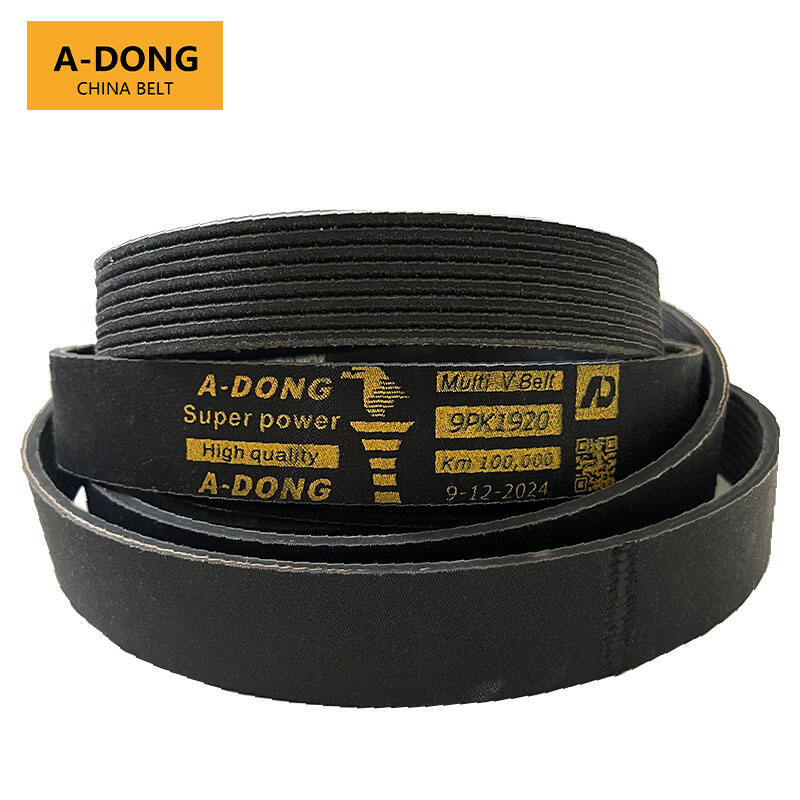
When an amateur cracks the bonnet open, what a number of motorists can identify by looking at it are the dipstick and the coolant reservoir, but not an inconspicuous belt- the multi-ribbed belt, sometimes called the accessory belt, or serpentine belt. This apparently fragile belt is the power transmission belt of the engine, and silently supports the normal working of the core functions of vehicle power supply, cooling, steering and air conditioning. In case of malfunction, you not only will have a vehicle that will break down along the way, it may also require expensive engine repairs in the thousands. Today we break the well-knowns of the multi-ribbed belt--of its operation and self-checks; of the pitfalls of replacement--and can help you in keeping your car under control.
I. Understanding the Multi-V Belt: The Unsung Hero of the Engine Bay
Multi-v belt gets its name because of the numerous longitudinal ribs that wedge-shaped occur on its inner surface. These ribs interact with the grooves on the pulley in exactly the correct manner which increases the contact area and friction tremendously. This design removes the problem of slipping between the transmissions and this design is more efficient and stable as compared to traditional v-belts. Its design looks very basic because it actually has complex design with three essential layers performing separate roles to provide stable transmission:
Tension Cord: Carries lateral tension, which involves high tensile strength and dimensional stability, which is the backbone of the belt;
Canvas Layer: Coats the tension cord, gives sideways support, and minimizes loss of friction by the tensioner pulley;
Bottom rubber layer: Bearing friction force and lateral pressure, needs compression resistance, wear resistance, oil resistance and noise damping.
The multi-ribbed belt being the main part of the whole engine accessory system has the main task of power distribution. When the engine is running, the multi-ribbed belt is driven by the crankshaft pulley, which powerfully moves four components that cannot possibly be ignored:
- Alternator: Recharges the battery and charges all the electrical systems in the vehicle (headlights, dashboard controls, ignition). When it comes to a stop, the battery is soon exhausted, and the engine will stall;
- Water pump: Circulates a coolant to maintain the temperature in the engine to avoid over heating and cylinder taking off;
- Air conditioning compressor: This is one that keeps the cabin cool. In summer it is necessary, otherwise the inside is a sauna;
- Power steering pump (mechanical systems): Reduces steering. When it ceases, the steering wheel becomes immediately heavy and hazards when traveling at high speed are very dangerous.
The multi-v belt is in effect the master switch of the engine. Its dependable functioning is the basis of protection of safe vehicle functioning.
II. The ‘Lifespan Threshold’ of Multi-V Belts: When Should They Be Replaced?
Multi-v belts are made of mostly rubber and are subjected to long durability of the high temperatures of the engine compartment, oil pollution, and friction. This leads to progressive ageing and deterioration, just like in case of an elderly domestic rubber band which grows brittle and breaks with time. What most motorists fail to understand is the fact that they only replace when they are broken without knowing that maintaining the multi-ribbed belt at a time when they break is much more expensive as compared to those of maintaining it proactively.
Based on mainstream vehicle manuals, automotive industry test data, and applicable national standards, the replacement cycle of multi-ribbed belt can be summarised by a 'dual standard, either first' as follows:
- Basic interval: 80,000 to 100,000 kilometres or 4 to 5 years, whichever the first, will require immediate replacement.
- Exceptional conditions: When the vehicle is regularly used under hot, dusty or oily conditions, or when carrying heavy loads, there is increased accelerated wear. The inspection and replacement are advised after 20000 miles or 1 year before;
- National Standard Advisory: According to Technical Conditions of the Safe Operation of Motor Vehicles (GB 7258- 2017), the aged or damaged engine belts are a failure in the motor vehicle safety technical examination making the vehicle inapplicable in the annual technical examination. The replacement should not be postponed.
The most important thing is that the multi-ribbed belt (outer belt) and the timing belt (inner belt) should not be mixed up: many vehicle owners confuse the two:
Multi-ribbed belt (outer belt): When the engine compartment is opened, we can see this belt which is found to be grooved and is quite wide (about 5 cm). Its cost is easy to replace, which is usually around ¥500-1000;
Timing belt (inner belt): This is hidden in the engine casing and this is what coordinates the work of the crankshaft and camshaft. Replacement involves engine disassembling, which costs between 1500 and 3000 yuan. It is much worse than failure and may result in the bending of the pistons and this will require a complete engine overhaul.
III. 3-Minute Self-Check Guide: Detecting Multi-V Belt Failure Warning Signs at Home
In addition to the planned replacements, the routine vehicle operation gives us the opportunity to detect the multi-v belt anomalies using simple self-checks to avoid the failure on the way. These three approaches do not need any specialized equipment but they are easy to learn by amateurs. Always remember to check the engine when it is cold (has cooled more than two hours) or else it will burn you:
- Eyes: Look for Cracks, Frayed Edges, and Flaking
Unzipped the bonnet and found the multi-ribbed belt (the most evident wide belt). Investigate the condition of its surface:
Normal Condition: Stylish surface with different color (black or dark grey), no injury, cracks or peeling.
The warning signs include transverse cracks, frayed edges, rubber flaking, or a whitening and brittle appearance signifying deterioration that needs an immediate replacement.
- Finger press: Measure tension
Put pressure (without force) on the center of the belt and note deflection:
Normal state: Depresses and rebounds quickly on release 0.5-1cm, which suggests the right tension;
Abnormal condition: Depresses more than 1.5cm, giving excessive slack and allowing slippage, resulting in squealing sounds, or nearly none whatsoever, giving excessive tension, and accelerates the wearing of bearing, and eventually may damage the tensioner pulley.
- Aural test: Check abnormalities of transmission
Monitor engine compartment sounds when driving normally. The following scenarios are likely to suggest multi-v-belt problems:
① On cold starts, a squeaking grating noise lasts 3-5 seconds and then dies away;
② Enhanced noise with acceleration or with air conditioning on, and this passes when the air condition is turned off;
③ There is a clunking noise during driving with minor power hesitation.
IV. Multi-V Belt Replacement Pitfall Guide: Four Common Misconceptions to Avoid
Several drivers commit some pitfalls during the replacement of multi-V belts, apparently saving to ultimately cause safety hazards or lead to frequent repairs. Basing our arguments on the experience of automotive repair industry and pitfalls owners experience in real life, we provide you with the four most common misconceptions that will help you save money and avoid trouble:
Misconception 1: #1 Replacement of the Belt and not the tensioner pulley and idler pulley.
The tensioner pulley and idler pulley are extremely critical components that fix and move the multi-ribbed belt. The periods of their life bearing are also in order in which the belt itself is in order. Most car owners do not replace these two parts but change the belt only in order to save on cash. The wearing out of the old ones will however destroy the new belt directly and will break within less than 10,000 kilometres. Professional Warning: It is necessary to replace the multi-ribbed belt, and at the same time, it is advisable to verify the tensioner and idler pulley. To replace them at the same time, in case of wear or other suspicious sounds, it is better to replace them. This may be an additional cost of 30-50 pound but will save on future repair.
Misconception 2: This is the notion of search after original equipment since the higher the cost the better quality.
Approved dealerships are usually encouraging to use so-called OEM specific belts, twice the price of more regular brands, and they only suit OEM parts properly, according to them. The fact of the matter is that there is a high degree of maturity of the multi-ribbed belt technology. Quality is guaranteed by any brand that is decent and meets the requirements of the vehicle. Its key brands in high quality include Gates, Bando, Mitsuboshi, Dayco and A-Dong. The brands enable many manufacturers to possess their original equipment belts that are of good value to the money.
Misconception 3: Driving in the garage with a broken belt.
When a few motorists are aware that there is a broken V-ribbed belt, some of them rationalize that it is not far to the garage and they will manage to make ends meet and reach the garage when they discover that, playing with your life! Power steering and brake assist systems can fail due to the possibility of a broken multi-ribbed belt; this can lead to a rapid overheating of the engine and its seizure. This is a serious risk of accidents particularly in the motorways. Proper course of action: Switch on hazard lights as quickly as possible and tug at the shoulder of the road and switch off the engine and call your insurance or repair shop. Keep on waiting until a tow truck comes- do not attempt to move on.
Misconception 4 Electric cars do not need to substitute multi-ribbed belts.
One of the misunderstandings among the users of electric cars is that there is no need of replacing the multi-ribbed belt since there is no engine in the electric cars. This is incorrect. Components of the electric cars such as the air conditioning compressor, coolant pump, are still driven by auxiliary belts (Multi ribbed belts), and they are not any different to replace than petrol vehicles (80,000-100,000 kilometres or 4-5 years). The inability to replace may lead to air conditioning system failures or battery cooling systems and lead to nearly similar expenses in the process of fixing.
V. Recommended Selection and Replacement Channels: Choose Wisely to Save Half the Cost
The performance and cost implications of the avenues of multi-ribbed belt selection and substitution are at once. The following is a well-developed reference guide that would see you make informed decisions and avoid traps depending on the unique requirements of the owner:
Selection Recommendations
① First, appreciate the picture of good brands: Gates, Bandando, San-Star, Daihatsu, McGrady and so on are of good reputation and suit very well;
② Check compatibility of the vehicle: Be sure to specify when and model buying: This is to make sure you are not incorrect in the specifications (V-belt nomenclature is determined by the number of wedges, cross-section, and length), and it will be important that you match the same.
③ Get rid of bad parts: The V-belts of low quality are of uneven thickness, poor quality of rubber, so their destruction and ageing speed is higher. Though it seems cost effective it is a costly affair at the long term run.
2. The comparison of replacement channel is carried out.
Authorised Dealerships: most expensive (outer belts: 800-1500), these are installed in the owners who are not car-savvy and those ones who can afford to spend money on convenience, guaranteed quality;
Good Garages: Good value (outer belts: 500-1000), good technical service, the selection of most of the owners;
Roadside shops: Lowest price (300-500 RMB of outer belts) may be accompanied by low level of technical quality of the parts hence, not advisable.
Final Summary: Small Belt, Big Safety
The multi-v belt might appear to be a minute detail that is present in the engine bay but it has an immense purpose of ensuring that the vehicle is operating safely. It is cheaply maintained, though failure to maintain may lead to overhaul of the engine, road breakdown or even accidents. It is important to change the oil filter after every 80-100,000 kilometres or 4-5 years, do a regular self-check in 3 minutes, and there are four pitfalls to avoid during changing of the oil filter, that is why these three main things should be kept in mind. This ensures that it keeps operating safely and also your safety on the road is assured.
Either way, it is the least stressful and least costly way to be than the inconvenience of roadside breakdowns and costly repairs. You may want to have your car checked carefully, during the next service time, in case you are uncertain about the time when your vehicle will actually require replacement.
Table of Contents
- I. Understanding the Multi-V Belt: The Unsung Hero of the Engine Bay
- II. The ‘Lifespan Threshold’ of Multi-V Belts: When Should They Be Replaced?
- III. 3-Minute Self-Check Guide: Detecting Multi-V Belt Failure Warning Signs at Home
- IV. Multi-V Belt Replacement Pitfall Guide: Four Common Misconceptions to Avoid
- V. Recommended Selection and Replacement Channels: Choose Wisely to Save Half the Cost