 EN
EN
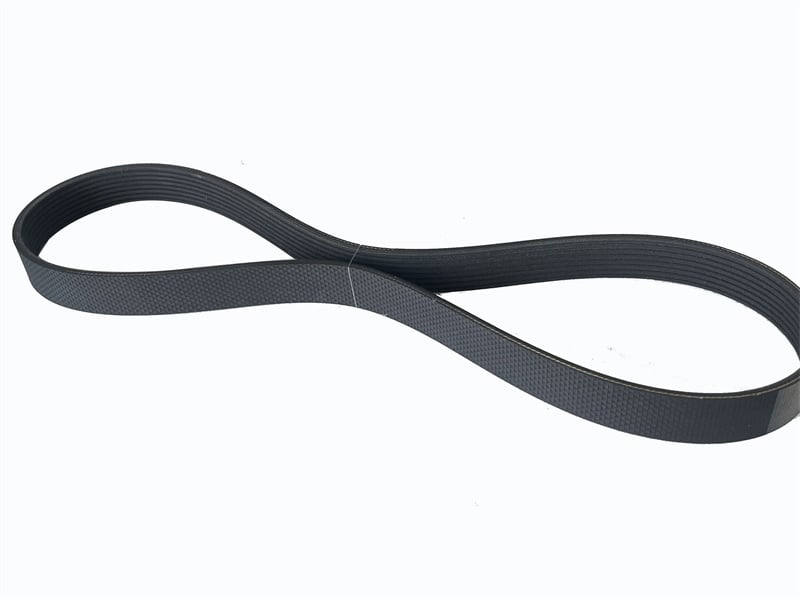
Automotive transmission belts being exported to different regions and continents are not chosen solely based on pricing - their ability to withstand every weather condition, roads, terrains, climate and usage in the long run, be it anywhere on the earth, has always made global standards like ISO, SAE, JASO and DIN mandatory. Guanpin, founded in 1990, has over 26 years of expertise in belt manufacturing. We have established a stringent quality control system that incorporates a unique multi level inspection process to cover every aspect. All our testing equipment is modern and the examination procedure applied on all belts, timing belt, PK belts or V belts manufactured by us are the same which we apply to our premium products. In this write up, we focus on the four pillars of our test process which make us stand tall.
Raw Material Incoming Inspection – The Foundation of Quality
Quality comes into play prior to production. Each incoming shipment of pure rubber (EPDM, CR, or NR), reinforcement cords (polyester, aramid, or glass-fiber), or fabric covers is placed in quarantine upon receipt at our facility. Our laboratory subjects raw materia samples to a series of tests, including:
Mooney viscosity measurement for processability
Accelerated aging oven testing for heat-resistance (72 hours at 100°C)
Tensile tests on cords to determine maximum breaking force
Thermogravimetric analysis (TGA) to verify filler composition and oil content against our recipe specifications. For fabric samples we determine tear strength and test resistance to delamination from the rubber using a peeling test apparatus. If the readings fall outside established acceptance values for the lot, it is immediately rejected for return to the supplier–we can never produce an “exported product” from the components we import.
Dimensional and Visual Inspection During Production
Our 30-minute dimensional checks take place on each and every length of belt that travels through our molding and vulcanizing process. We check the length, width at the top of the belt, the total thickness and-when processing our PK type-the rib thickness, while for timing belts we also check for the spacing of the teeth against the customer dimensions. All measurements, to what is most often a ±1% range of the specified value-are confirmed with lasers and optical comparators. If any measurement falls outside this band, the system instantly resets and re-examines the process. If not corrected, the entire previous 100 lengths are 100% inspected. Simultaneously our experienced visual inspectors look over each belt under a polarized lighting for defects such as tiny pinholes or blisters, foreign inserts or bodies, insufficient cover of the cord by the fabric or areas where the material in the mold has not completely filled. When shipping to export, all belts are also inspected according to AQL 1.0 using ANSI/ASQ Z1.4 with only one major defect permitted in any sample lot size – a much tighter measure than the standard 2.5 allowed in the industry. The 1.0 sampling plane and AQL standard provide double layered quality assurance – dimensions can not be incorrect and visual blemishes will not reach the packaging and distribution center.
Dynamic Performance and Endurance Testing
That is also the reason why we subject test belts from each export lot to our dynamic test rigs simulating actual engine conditions. For our V-belts and PK belts we subject a “power transmission test” to our sample belts at 6,000 rpm and with variable loads. This test measures percentage slip and temperature rise in the belts. A V- or PK-belt must not exceed a 3% slip under rated load and not go beyond a temperature of 85°C after 2 hours run time. For the tooth-following belts (e.g. timing belts) we carry out a “tooth jump test” to ensure, in case of periodic shock-loading, that the belt still runs in sync with the crankshaft. As a further part of our testing of timing belts we use a “fatigue endurance run” (over 100 hours run on a 3-pulley arrangement) to check the adhesion of the tension cords and possible damage of rubber cracking and tension cords. Those “happy few” not showing damage and tension loss qualify for packing. For extreme export destinations (e.g., Middle Eastern heat or Siberian cold), we additionally run climate-specific tests at -40°C and +120°C, confirming that our compounds remain flexible and robust across all environments.
Packaging Integrity and Final Lot Release
Our final round of testing comes full circle when the belts leave our factory. When exported, belts often face humid marine atmosphere, are thrown about and handled rough during transport, and can have lengthy shelf lives. We take a few randomly chosen cartons from each pallet and subject the packaging to a drop test (from 1.2 meters onto concrete), and a compression test (500kg for 24 hours), in addition to a seal strength integrity on moisture-barrier packaging. Each belt is packaged in UV-stable anti-static packaging. Edge protectors reinforce our cartons and if necessary, we double reinforce. We cross-reference parts-numbers, quantities, production date, customer logos against your order through a barcode scan linking up to our internal ERP system. Finally, we produce a detailed lot release report detailing certificates of raw materials, in-process inspection forms, dynamic graphs, and packing shots which you receive prior to shipping. Each export order receives its own specific tracking code, enabling us to easily track and correct issues at your end if they should arise, with back end records pinpointing the shift.
Guanpin means "quality for export" , it means it. It doesn't matter how you want to write it or say it – it means that quality is structured, documented, measured, and communicated, based on the foundation of what we've learned since the Huayu Rubber Belt Factory era 26 years ago up to the international supplier we are today. Testing is not an expense, it's an investment in your trust. You are welcome to visit, inspect, sample and measure our laboratory to compare standards with anyone in the industry. Whether you desire special colors, specific cord materials or private-label packaging, each order we process is subjected to the very same rigorous testing standards. Let us supply you a test sample report from our quality department or arrange a discussion about your local and regional requirements.