 EN
EN
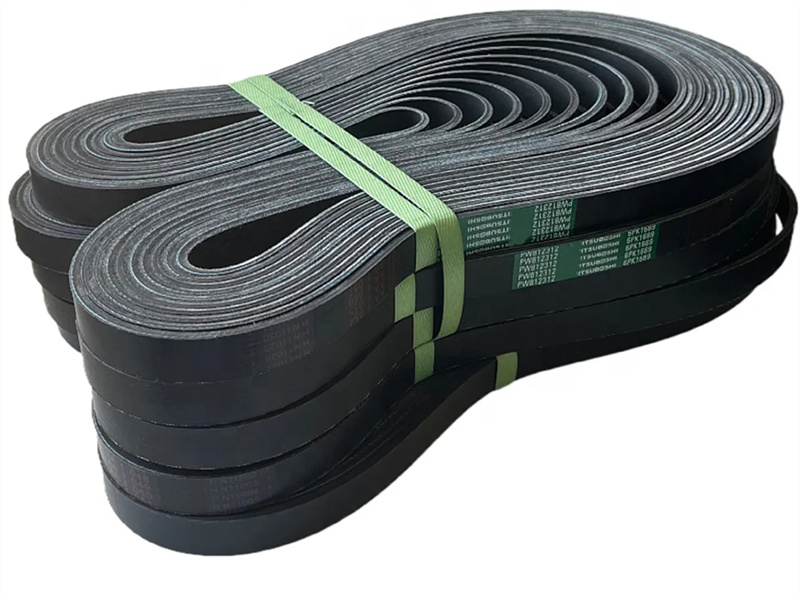
For decades, vehicle belts were produced almost solely from neoprene (polychloroprene) and natural rubber compounds. While effective, both types of automotive belts had drawbacks: poor heat resistance, degradation in ozone-rich environments and a propensity to harden and crack during years of under-hood use. Back in Guanpin’s formative years, we consciously decided to switch to ethylene propylene diene monomer (EPDM) rubber compounds for all our automotive fan belts, V-belts, and timing belts. Why? Simply put, the benefits are practical and, best of all, they can be measured. They translate directly to longer belt life, fewer on-road breakdowns and ultimately reduced operating costs. Here are four specific examples:
Superior Heat and Ozone Resistance – Surviving the Modern Engine Bay
Temperatures under the hood have exploded over the last two decades, with many downsized, turbocharged engines regularly operating between 100°C and 120°C. Standard neoprene belts become brittle and stiff after 90°C, since the polymer bonds can prematurely crosslink and break, resulting in tensile failure. Because EPDM has a fully saturated backbone structure, it is inherently resistant to thermal-induced oxidation. Here at Guanpin, we typically develop EPDM compounds that retain more than 85% of initial tensile after 168 hours at 120°C, a harsh test that will quickly defeat almost any non-EPDM belt. EPDM also has strong inherent resistance to the effects of ozone and UV radiation. While neoprene belts stored on a warehouse shelf can become surface crazed within a couple of months, our EPDM belts look the same and function identically after extended environmental exposure. This makes them perfectly suited to overseas shipments traversing different climates, or to cars stored in areas with abundant sunlight.
Enhanced Flexibility at Low Temperatures – Cold-Start Reliability
Standard rubber belts harden very severely when exposed to subzero conditions. A stiff belt will fail to fit snugly around the pulley grooving during cold starting conditions. This will result in slippage and belt squeal at the startup point on both sides of the drive resulting in damage to the belt as well as the tensioner assembly. EPDM has an extremely low Glass Transition Temperature (Tg), hence the belt is extremely elastic even at -40°C. At Guanpin, all EPDM batches will undergo an ISO 4671 standardized cold bend test. All our EPDM belts can bend at -40°C for 72 hours, no sign of cracking or brittle breakages of the material. This characteristic is especially vital for fleets in Northern Europe, Canada and Siberia. Also very flexible belts mean less startup shock is applied to the tensioner and the entire system will last longer, not only the belt.
Longer Service Life and Reduced Maintenance Frequency
This combination of heat resistance and flexibility translates directly to longer mileage between service intervals. For example, the typical service interval of a passenger car’s neoprene V-belt is 40,000-50,000 km, and changing intervals for traditional rubber-based timing belts typically fall in the 60,000-80,000 km range. But a Guanpin V-belt made with our EPDM formulation can last 100,000-120,000 km in a timing system or 80,000 km in an accessory-drive application under typical operating conditions. Don’t take our word for it-we’re able to show these kinds of life extensions via tests on our own dynamic fatigue rigs that repeatedly stress and stretch the belts at 6,000 rpm for over 500 hours under varying dynamic tension conditions. The outcomes? Less rib damage, reduced stretch and slower deterioration of tension in the belt over time. What does it mean to fleet managers or workshop owners? Lower service frequency, less vehicle downtime and improved customer happiness.
Custom Formulation Flexibility – Tailored to Your Application
We don’t simply “roll-off” generic EPDM here at Guanpin. We compound our own, meaning we have complete control to tailor an EPDM to your needs. If it is an engine with known leaks and a need for oil resistance, we tailor the plasticizing and filler system. If a heavy duty diesel accessory belt requires higher modulus, we incorporate additional loading for carbon black and fine tune the curing system. Perhaps you’re looking for something like blue, green, red (or your custom color!) for your company branded product? EPDM accepts pigment without negatively impacting mechanical integrity. Additionally, our EPDM belts can be combined with numerous tensile cord types (polyester, aramid, glass fiber) and cover treatments (like a chlorinated cover for noise). With order volumes ranging from 500 pieces to 50,000 pieces, our technical department will work with you to formulate a compound and construction for your torque curves, pulley geometry and driving conditions. And we don’t just talk—we’ve been building these exact things for the last 26 years.
The choice of EPDM is more than just an upgrade to an alternative material; it is a strategic choice in providing reliability, durability, and performance, where it is needed the most in the automotive market. Guanpin has put significant investments into EPDM processing technologies, ranging from internal mixers to sophisticated calender lines, enabling us to consistently produce belts with the best export-grade quality. If your application still relies on conventional rubber materials, give our EPDM product line a chance to amaze you. Speak with us about your unique needs for compounding, coloring, and branding, it is what we are experts at.