 EN
EN
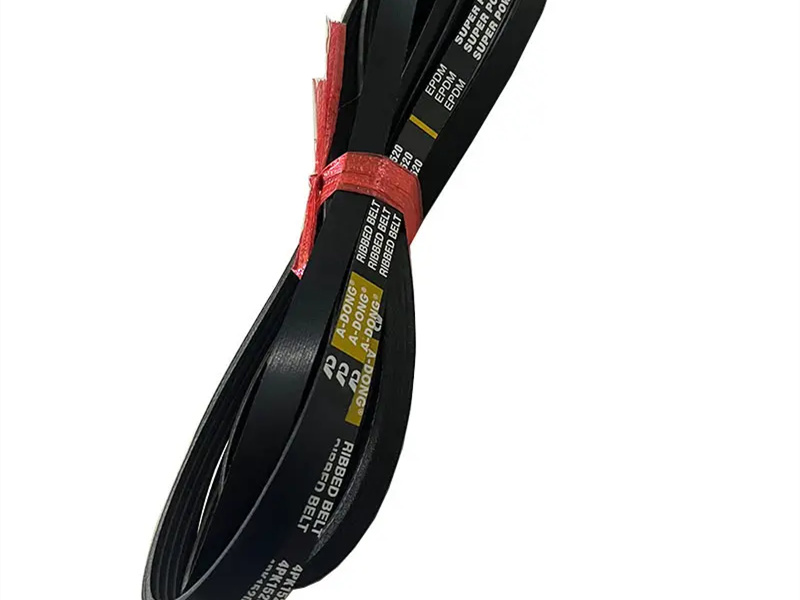
No one would want to drive a car without the auto drive belt system working, particularly for the operation of the engine. Our belts are the art and science at Guanpin, having more than 20 years of belt making experience. Our mission from our early days as "Huayu Rubber Belt Factory" to becoming a professional OEM/ODM drive belt supplier, has given us the insight that every drive belt is a precision engineered product. The quality of the materials used and the quality of assembly are almost the sole determinants of a belt's performance, service life, noise reduction, and efficiency of power transmission. Let's inspect some of the most crucial features and materials that constitute a quality timing belt, V-belt or fan belt for a car.
The Rubber Compound The Heart of Flexibility and Heat Resistance
Belt material is a specially formulated elastomer. Made of premium grade synthetic polymers, usually chloroprene (CR) or ethylene propylene diene monomer (EPDM). The rubber compounds used at Guanpin will depend on the use of the belt. EPDM will be highly resistant to weather and show good heat stability in use at high temperatures (that can reach 120°C), and is anticipated to be continuously exposed to oil, ozone and moisture under the hood. The overall coefficient of friction of the belt is rubber, which is not prone to slipping on the pulleys, and will absorb vibration shocks. Each batch of rubber is specially compounded to give the flex properties at a low temperature and the hardness at high speed which we need for our timing belts and v belts to run over a wide range of temperatures.
Tensile Cords- The Backbone of Strength and Dimensional Stability
The tensile cord, which is considered to be the most structurally important part, lies beneath the rubber surface. These cords are typically made from strong materials such as polyester, aramid or fiberglass. When transmitting power, they will need to bear the entire pulling force and need to keep from elongation during thousands of operating hours. Guanpin is very conscious of the use of cord materials because even a slight stretch may change the valve timing in interference engines which could result in catastrophic failure. In our automotive timing belt, we make use of helically wound glass fiber cords with adhesive dips to glue securely to the rubber. We can consider polyester or aramid cords for V-belts and PK belts with multi-ribs in order to withstand increased shock loads. Belt life and noise is also directly related to the load that is being wound, so even the load itself is calibrated for the winding process, either spiral or straight.
Fabric Cover and Tooth Profile- Wear Protection and Meshing Precision
The outer part of a drive belt is not just for appearance, it is a practical fabric cover which shields the rubber from rubbing, cutting and environmental debris. It is a frequently treated nylon or cotton/poly polyester, with friction reducing coatings added to it. This precision-molded fabric is used to make the tooth profile for timing belts to provide positive, non-slip engagement with crankshaft and camshaft sprockets. Guanpin uses computer-controlled cutting and grinding equipment to produce tooth pitch, tooth height, and the flank angles within international standards (ISO or SAE), with tolerances of less than 0.1 mm. Another aspect of the surface finish is how much noise the fabric will produce when it is spinning at high speeds, a smoother and less abrasive weave will minimize the whine. When the sidewalls of automotive fan belts and V-belts are subjected to lateral wear or dynamic tension variations, the tandem designs are used to add reinforcement to the sidewalls.
Filler Materials and Curing Systems- Enhancing Performance and Durability
A variety of filler materials and chemical additives are also necessary There are also a number of fillers or chemical additives that are required to adjust the end properties of the belt. The most widely used reinforcing filler is carbon black, which has the effect of enhancing the tensile strength and tear resistance. There are also silica or short-fiber fillers (aramid pulp) added for transverse stiffness for little or no weight. The amount of cross-links in the rubber network depends on the curing (vulcanization) system (usually sulfur or peroxide system). Guanpin has created exclusive curing cycles for the balance of elasticity and permanent set. A peroxide cure with a higher cross link ratio is acceptable in a timing belt as it has a low level of hysteresis and does not allow heat to build-up. Anti-degradants, such as waxes and antioxidant amines are also chosen by our R&D team to ensure the belt is protected from UV and ozone degradation, especially when used during regular maintenance. Our product evaluation is done in-house before making before the manufacture and we supply customized formulations to suit various applications/operating conditions of our clients including cold start applications in northern climates and high torque diesel applications.
Conclusion
At Guanpin, we understand that an auto drive belt is not just a product, it's a symphony of well selected materials, making an auto drive belt. Every product, including the heat-resistant EPDM rubber matrix, the stretch-resistant glass-fiber tensile cords and the scientifically formulated curing system, is carefully chosen and extensively field-tested for reliability. In the last 26 years we have gained a wealth of experience, making sure that we can now design not just the look, the colours and the packaging but also the actual content of our belts to your personal performance needs. Our engineering team is right there to work together.