
 EN
EN
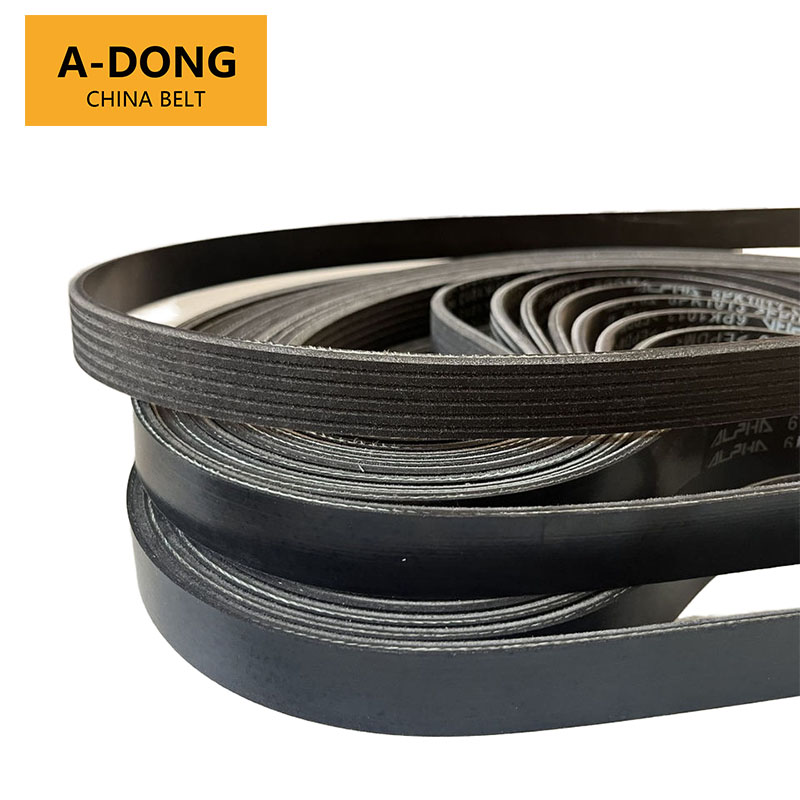
If you have ever peered under the hood of a car, you've undoubtedly seen an assortment of belts spinning on pulleys. Among these is one of the most important-yet often unnoticed parts in an engine, the timing belt. While the serpentine or V-belts that drive things like the alternator and air conditioning compressor are exposed and easily visible, the timing belt operates inside your engine. Understanding what a timing belt is and what it does will help explain why a good timing belt is vital to your engine.
Definition and Basic Structure of a Timing Belt
A timing belt, also known as a toothed or camshaft drive belt, is made of durable rubber with teeth molded onto its interior surface. These teeth engage with precisely matched grooves on the engine's crankshaft and camshaft pulleys. The positive engagement of the teeth on the belt with the grooves on the pulleys mechanically links these two components, creating a perfectly synchronized system. Standard serpentine and V-belts use friction to create their mechanical link, allowing for some slip that isn't normally noticeable. Timing belts, however, use positive engagement and cannot slip, making them inherently more precise. The rubber itself is usually strengthened by tensile cords of fiberglass, aramid or similar, so it does not stretch. Wear-resistant fabric is generally applied to the teeth of the belt, to endure hundreds of millions of flex cycles.
The Primary Job: Synchronizing Valve and Piston Movement
The primary function of a timing belt is to keep the engine's crankshaft and camshaft working together in perfect synchrony. The crankshaft moves the pistons up and down inside the cylinders of your engine, while the camshaft controls when the intake and exhaust valves open and close. Both must work in precise synchronization to control how the air-fuel mixture enters the cylinder, is compressed, ignited, and then expelled as exhaust gases. A timing belt ensures that for every two rotations of the crankshaft, the camshaft will rotate one time. If the belt stretches, breaks or jumps a tooth, it will cause a misalignment between the valves and the pistons and if it is not corrected in time, can lead to catastrophic damage to both components.
Why Precise Timing Matters for Engine Performance
Precise valve and piston synchronization is critical to an engine's performance and fuel economy. A perfectly timed engine will produce optimal power for its displacement, have smooth, linear acceleration, and operate efficiently. A misfiring, rough running, or stalling engine is often indicative of a timing belt that has slipped and lost its synchronicity. Backfires through the exhaust or intake can also be a symptom of a slipped timing belt. A highly efficient engine will achieve lower exhaust emissions with good gas mileage. The use of a high-quality, precisely made timing belt from a reputable manufacturer is essential for ensuring that valve and piston synchronicity remains accurate for tens of thousands of miles.
Timing Belt vs Interference and Non-Interference Engines
A non-interference engine design has the pistons in a separate compartment from the valves. If the timing belt breaks in a non-interference engine, the pistons will not hit the valves. You only need to replace the timing belt, ensure proper installation, change the oil, and you’ll be back on the road. In an interference engine, the pistons and the valves occupy some of the same space at different points in their operation. In the case of an interference engine if the timing belt breaks at high speeds while running, there is a strong possibility that the piston will crash into the open valves causing severe valve, piston, and cylinder head damage. Modern engines use interference designs quite frequently, allowing for higher compression ratios for efficiency, so making sure your timing belt is up to par is even more important.
Common Signs of a Worn or Failing Timing Belt
Unlike a fan belt that will typically give you warning in the form of a high-pitched squealing, a timing belt gives no audible indication that it is failing. One of the most telling signs of a failing timing belt is often the presence of oil leakage from the timing belt cover. Oil can degrade the rubber of the belt and cause premature failure. Also, the engine may suddenly lose significant power, run rough, or fail to start completely. Some engines will also use a water pump which is driven by the timing belt. Always check the manufacturer’s stated time for replacing your timing belt, as this can vary greatly, between 60,000 and 100,000 miles, and at that figure is a far cheaper price to pay than the replacement cost of engine components ruined by total failure of the timing belt.
Why Professional Manufacturing Matters for Timing Belts
A precisely machined high quality timing belt does not occur by accident. To achieve the necessary precise tooth spacing and minimize tooth slippage, special equipment is needed. Tooth pitch and tooth depth are critical factors, as is the material strength and thickness of the belt. Manufacturers such as Xingtai Guanpin Rubber Products Co., Ltd. have refined their processes over the past 20 years, and understand the precise engineering and manufacturing involved to make the highest quality parts. Their specific production and selling of automotive timing belts used in current interference engines ensures you receive a high quality timing belt perfectly engineered for today's demands. High quality precise timing belts are a vital part of your engine's life.
Table of Contents
- Definition and Basic Structure of a Timing Belt
- The Primary Job: Synchronizing Valve and Piston Movement
- Why Precise Timing Matters for Engine Performance
- Timing Belt vs Interference and Non-Interference Engines
- Common Signs of a Worn or Failing Timing Belt
- Why Professional Manufacturing Matters for Timing Belts