 EN
EN
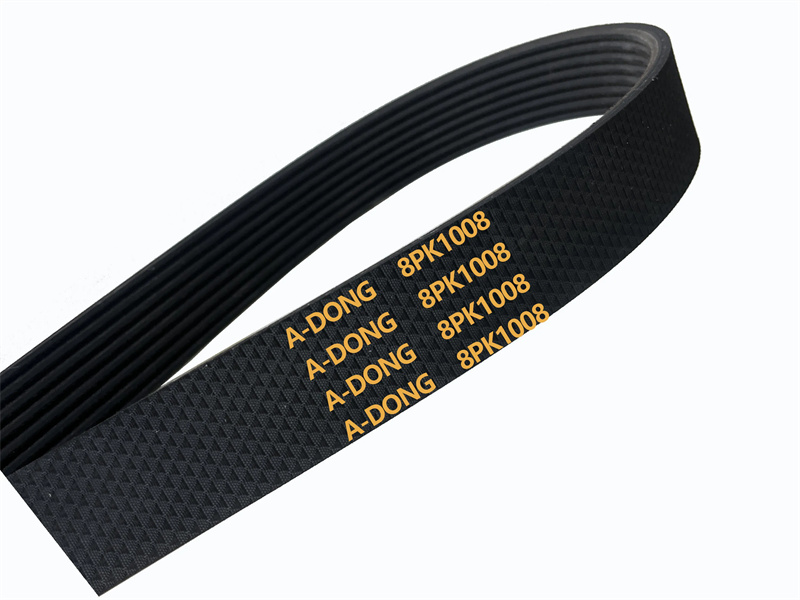
If you're talking about today's engine accessory drive systems, you'll often hear the term "PK belt" being used in tandem with "fan belt" or "V-ribbed belt.” So, what exactly is a PK belt and how is it different from regular auto fan belts? Our over 26 years' experience at Guanpin has enabled us to make these key components for our international customers with tailored solutions. In this article we will explain what exactly a PK belt is, how it works, and some of the most common applications in automobiles today. If you are a distributor, a fleet manager or an automotive engineer, knowing these differences will allow you to choose the correct belt for the particular power transmission application.
Defining the PK Belt Ribs, Profiles, and Standards
“PK” is an international standard that applies to multi-ribbed belts, usually referred to as “poly-V” belts or “serpentine” belts. The "P" refers to the belt profile (3.56 mm is the most common rib pitch), and the "K" signifies it is intended for use in automotive accessory drives, not industrial or agricultural uses. A PK belt is a multi-ribbed belt with ribs are angled, or V-shaped, on the inside, that interlock with corresponding ribs or grooves on pulleys. Compared to traditional single-V belts this design offers a wider belt contact area which enables more power to be transmitted at a lower tension. At Guanpin, we manufacture the PK belts of different widths (3 to 10 ribs) and lengths, which are ideal for engine bays. The rubber compound used - typically EPDM-based - allows the ribs to be flexible at low temperatures but provide high resistance to wear at high rotational speeds, and perform consistently throughout the service life of the belt.
Core Advantages of PK Belts Over Traditional V-Belts
What is the reason that most modern automotive fan belt systems use PK belts as the standard? First, the multi-rib design provides load-sharing evenly across the total width, minimizing load concentration and consequently increasing belt life. Second, multiple accessories (alternator, power steering pump, air conditioning compressor, water pump, etc.) can be driven by a single belt that runs over multiple pulleys. The serpentine engine design helps to make the engine easier to design and lighter. Third, the thin cross section allows for smaller pulley diameters, which will enable engineers to fit more components into the increasingly compact engine compartments. Guanpin has mastered the tolerance of producing a PK belt, with each rib having an even height and spacing. Customers also appreciate the quieter operation of PK belts compared to traditional single-V belts. This noise reduction is achieved through optimized rib geometry that minimizes harmonic vibration and squeal during cold starts and rapid load changes.
Primary Application Scenarios Engine Cooling and Beyond
In the traditional definition of "automotive fan belts", the belts that power the cooling fan in the engine are often included. But now with the widespread use of electric fans the function of PK belts has changed. The current most popular use of a PK belt is in the front-end accessory drive (FEAD) system. In this configuration, it wraps around the crankshaft pulley and drives the alternator to charge the battery, the A/C compressor to cool the cabin, and the power steering pump to assist steering. A PK belt can also power a mechanical cooling fan in many heavy duty or commercial vehicles, especially in instances where the electric fan system is not cost-effective or is not capable of providing adequate cooling airflow. Guanpin's PK belts are available for light duty vehicles like passenger cars or heavy trucks and feature customized rubber compounds that are resistant to oil, heat and ozone all common stresses found in an engine. Belts are also available for agricultural and construction machinery, where the fan belt might have to run in dusty or muddy conditions.
Selection Criteria and Customization at Guanpin
Several things must be considered when selecting the proper PK belt for a specific application: the number of ribs, belt length, operating temperature range, and peak torque demand. An incorrect belt can cause belt slip or wear, or failure of the accessory. Our decades of production experience helps guide clients through this selection process at Guanpin. For instance, a high performance diesel engine may need a belt made of aramid tensile cords to overcome sudden torque increases, whereas a standard commuter vehicle can be just as well served by a polyester-cord belt. We also customize beyond standard size (such as customer branding logos, custom colored for easy maintenance identification, and a special rubber compound for low noise ratings in hybrid vehicles with frequent start and stop operations). From -40°C cold soaks to 150°C thermal cycling tests, our in-house testing lab puts every PK belt through the ringer to ensure that our belts carry the barest of minimum standards for durability, to the satisfaction of our worldwide partners. If you have any questions regarding custom solutions, we are here for you too, as at Guanpin, we think reliable power transmission should begin with the correct belt for the correct application.
Conclusion
The PK belt has changed the automotive accessory drive system forever, providing far more reliable power transfer, smaller size and quieter operation than previous types of belts. From powering the alternator, AC compressor, and even the cooling fan in most vehicles on the road today, this multi-ribbed belt is a must-have. The 26-year hands-on experience and 18 years of scientific research into material science, all put together by Guanpin, result in PK belts that endure heat, vibration, and wear. We can also offer full customization, including logo, colors, rubber formulation and cord material, to ensure you receive a product specific to your application.