 EN
EN
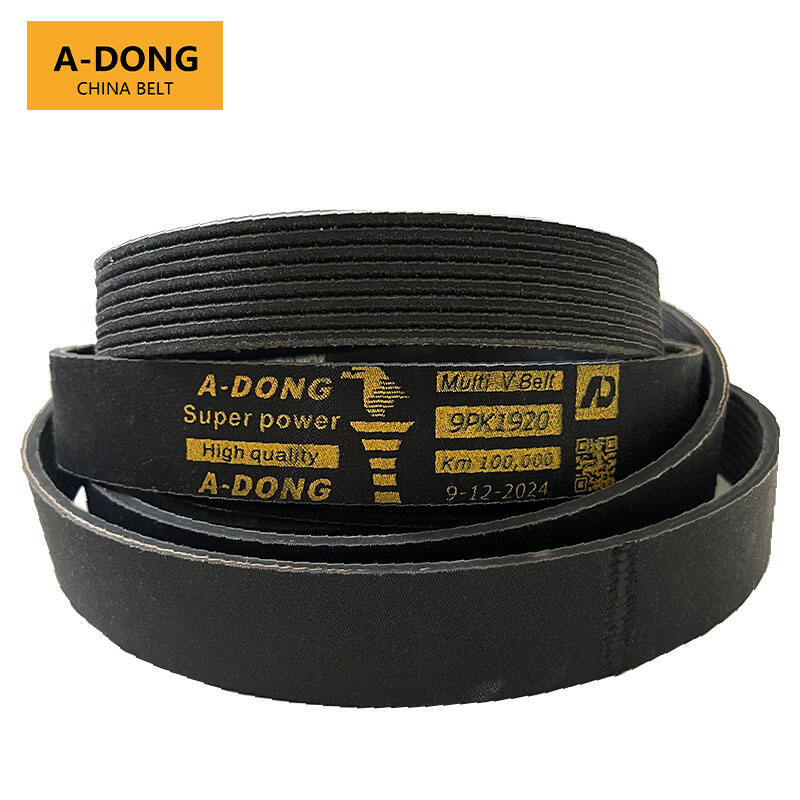
Car belts are the unsung heroes of the automotive world. Their job is to carry power from the crankshaft on the engine to key automotive components such as the alternator, water pump, power steering pump, air conditioning compressor and in some engines the engine valvetrain. Installing a bad belt causes premature wear, irritating noises and vehicle failure. The information contained within this guide will assist consumers in understanding the types of belts available and what to look for when shopping for one that will stand the test of time.
Understanding the Main Types of Automotive Belts
Your vehicle or application dictates the kind of belt you will need before you go out to make the purchase. There are three main kinds of belts: Timing belts, PK belts and V-belts.
Timing belts are more correctly known as cog belts. They are named after the fact that they are lined with 'cogs' around the inside that mesh with a corresponding groove within the pulleys to ensure that the rotation of the crankshaft and camshaft are kept exactly synchronized. Timing belts function inside of the engine and have set interval replacement times.
PK belts are becoming the norm for many accessory drives and the PK in fact stands for a metric v-ribbed profile. A PK belt features numerous small V-shaped ribs running along its length. These are also sometimes referred to as poly v-belts, serpentine belts, alternator belts and fan belts depending on their particular use. A PK belt can also drive more than one accessory at once.
V-belts have a traditional V-shaped cross-section. They are still found on older cars and in many industrial uses; their modern vehicle application however, is limited, but nevertheless still very relevant to many consumers.
Key Materials That Determine Belt Longevity
The rubber composition used in a belt dictates its lifespan against heat, oil and ozone. EPDM rubber is being increasingly used in premium automotive belts as it will not harden, or crack and perish in the way older rubber compositions will. It is resistant to cold extremes and will not glaze in extreme heat. More exotic HNBR compounds can provide even greater resistance to engine oil and coolant contamination for timing belts. The tension cords in the belt also need considering, Polyester cords provide adequate strength and have limited stretch, while Aramid or Fiberglass cords have even lower stretch characteristics, a requirement for timing belt accuracy.
Major manufacturers such as Xingtai Guanpin Rubber Products Co., Ltd. give customers the choice to choose the rubber materials and the rope materials according to their specific requirements, which is useful for certain conditions, especially for extreme or high performance conditions.
How to Inspect a Belt Before Purchase
The manufacturing quality of a belt is evident even by visual inspection. Run your finger over the surface of the belt, there should be no lumps or dings-a smooth finish. Examine the ribs on the PK belts closely. They should be sharp and well-defined and without missing or sloppy areas. The belt back should be relatively smooth but not excessively shiny, which indicates under or over curing.
On timing belts check teeth carefully for accuracy, their profile needs to be uniform along the entire length of the belt, and there should be an even fabric cover to them, with no bare rubber showing. Porosity and bubbling of the rubber show inadequate mixing/molding of compounds. Run your finger around the sides of the belt to detect if they are well molded or cut with no raggedness or frayed cords. A belt made by a manufacturer with 26 years of experience will typically possess these fine details, as the molds and dies are proven.
Why Customization Matters for Bulk Buyers
Should you be buying belts for reselling or incorporating them into your equipment then the level of personalization becomes a key element. Well established producers can implement the approved logo of clients onto the belt surface. Brand name can be personalized and achieved through a highly legible and wear-resistant printing method. The appearance colors of the product can be adapted according to your brand image or code system.
These types of rubbers are suited to differing climatic and engine compartment conditions, just as a specialist cord is needed for heavier duty uses. An adaptable manufacturer should be able to achieve this without straying from the international requirements.
Building a Long-Term Relationship with a Reliable Supplier
Automotive belt suppliers to industries that use them in large quantities would surely want to find reliable manufacturing partners who can save them money and time. Search for manufacturers with an experience base but also an openness to customization. Xingtai Guanpin Rubber Products Co., Ltd is the sort of stability you look for, being founded in 1997, that's more than 26 years of manufacturing know-how, having grown from a Huayu Rubber Belt Factory into a modern manufacturer.